Key Takeaways
- Carrier vetting confirms a carrier’s identity, authority, insurance, equipment and history before you offer them a load.
- While FMCSA approval shows that a carrier is registered to operate, vetting and identity tools help confirm that the person contacting you actually represents that carrier.
- A strong process covers five steps: verify identity, validate equipment, assess risk, check tracking history, and route documents to verified contacts.
- Vetting tools should continuously monitor carrier profiles after onboarding because changes in insurance, authority and contact details may imply fraudulent behavior.
Descartes, the company behind Descartes MyCarrierPortal, was named to the 2027 FreightWaves FreightTech 25, where carrier verification and fraud prevention led the rankings. That theme reflects how much of a broker’s risk is decided before a load is ever tendered.
Pre-tender carrier vetting is one of the most effective points to stop freight fraud. Stopping a fraudulent carrier before it gets the load is far easier than recovering freight afterward. This article covers what pre-tender vetting should include, the red flags to watch for, and why vetting shouldn’t stop at onboarding.
What is carrier vetting?
Carrier vetting is the process of verifying a carrier’s identity, authority, insurance, safety record, and compliance history before you offer them a load. It goes beyond collecting a W-9 and a certificate of insurance. The goal is to confirm that the company you’re booking is who it says it is, and that it is fit to haul the specific load.
Why isn’t FMCSA approval enough?
FMCSA-approved does not always mean a carrier is compliant with your requirements, and fit to operate does not always mean fit to use. Separately, public authority data shows that a carrier exists, but does not mean that the person emailing you truly represents that carrier.
Today’s fraud schemes are built to pass a basic check: bought MC numbers, look-alike email domains, fake insurance agencies and compromised inboxes. For common gaps in FMCSA-only vetting, see The Top 5 Mistakes in Carrier Vetting.
What should a carrier vetting process include?
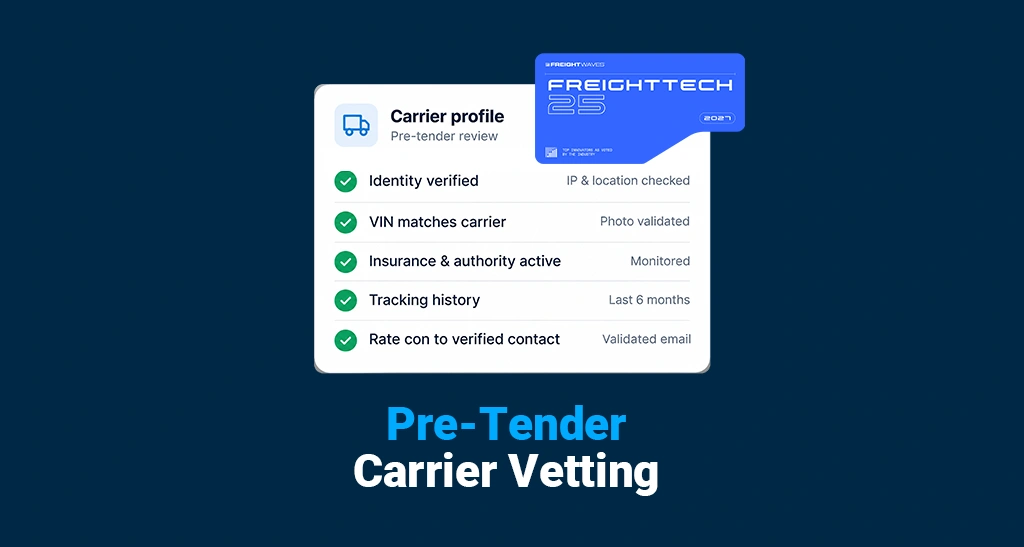
A strong pre-tender vetting process typically includes five steps. Descartes MyCarrierPortal™ supports each of them in one platform.
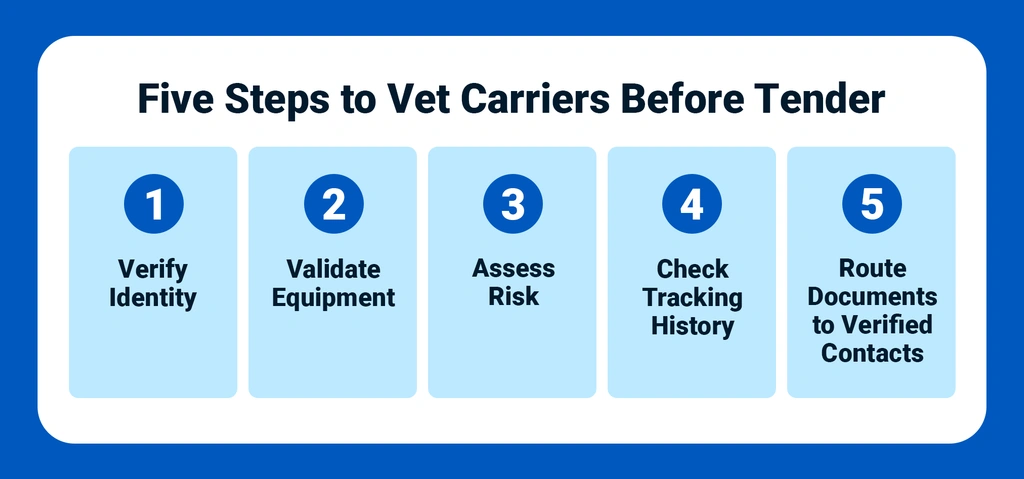
- Verify identity, not just authority. Confirm the company and the users acting for it. Descartes MyCarrierPortal captures the IP address and geolocation of whoever completes the carrier packet, and uses two-factor authentication across its user base.
- Validate the equipment. Text the driver a link to photograph the VIN. Descartes MyCarrierPortal records where and when the photo was taken and checks whether the VIN belongs to that carrier. A fake carrier usually has no truck to photograph.
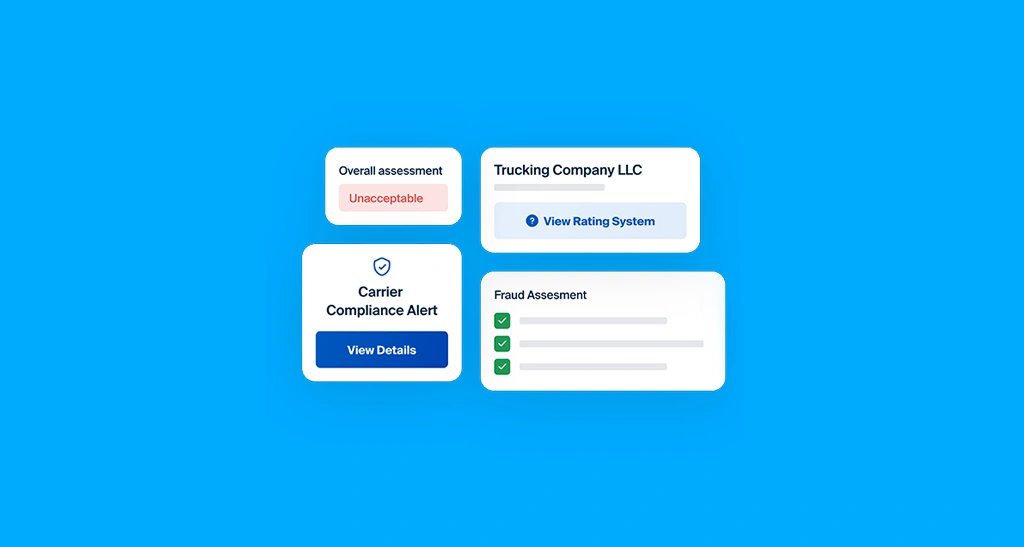
- Assess risk against your own rules. Build custom risk profiles for different parts of your business, using authority, insurance, safety data and incident reports from other companies in the Descartes MyCarrierPortal network.
- Check tracking history. Descartes MyCarrierPortal shows a carrier’s tracking volume over the past six months and the percentage of loads tracked with Descartes MacroPoint™, along with lane history showing where it has actually operated. Little or no tracking history, or no activity in your lane, is a reason to look harder.
- Route documents to verified contacts. Send rate confirmations to validated email addresses, and hold back the exact pickup address until tracking has started.
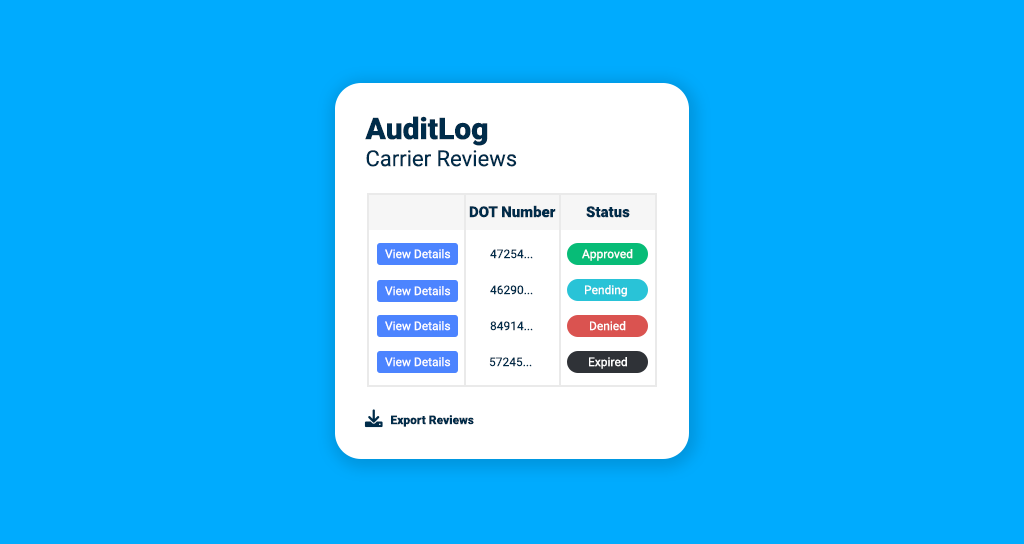
With Descartes MyCarrierPortal AuditLog, review and approval decisions in this process can be documented, giving you a defensible record of how each carrier was selected. See the AuditLog announcement.
What are the red flags in carrier vetting?
Common pre-tender warning signs include a new authority with no tracking history, recent changes to FMCSA contact details, look-alike email domains, VoIP phone numbers, and a VIN that belongs to another carrier. One red flag isn’t proof of fraud, but it should send the carrier to manual review. For the full list and what to do about each one, download the carrier vetting red flags checklist.
Why does carrier vetting need to be continuous?
A carrier that passed vetting six months ago may not pass today. Insurance lapses, authority gets revoked, and inboxes get compromised. Vetting once at onboarding can leave those gaps open.
Continuous carrier monitoring helps close them. Descartes MyCarrierPortal monitors insurance, authority and safety status after onboarding and alerts you when something changes. Its North American compliance team also proactively requests updated documents.
“A carrier that looked good six months ago may not look the same today. That’s why we treat vetting as something that continues after onboarding, not a box you check once.”
How do you vet carriers without slowing down onboarding?
Thorough vetting doesn’t have to mean slow onboarding. Descartes MyCarrierPortal preloads 95% of COIs from an established insurance database, and onboarding can be completed in as little as five minutes. Carriers update their packet when something changes, instead of refilling paperwork for each new broker. That makes you easier to work with, which matters as capacity tightens.
Frequently asked questions
What is carrier vetting?
Carrier vetting is verifying a carrier’s identity, authority, insurance, equipment and history before offering it a load, to help keep fraudulent or unfit carriers away from your freight.
What is the difference between carrier vetting and carrier onboarding?
Vetting decides whether a carrier is safe to use. Onboarding collects the paperwork and sets up the carrier in your systems. Strong programs do both together, then keep monitoring after onboarding.
What are common signs of carrier fraud?
Common signs include new authorities with no tracking history, recent FMCSA contact changes, look-alike email domains, VoIP phone numbers, mismatched VINs and incident reports from other brokers.
Why isn’t FMCSA approval enough to vet a carrier?
FMCSA authority shows that a carrier is registered to operate, not that the person contacting you represents that carrier or that it is fit for your load. Identity, equipment and history checks help fill that gap.
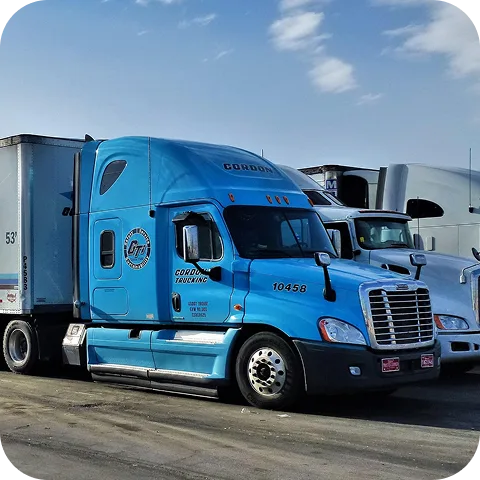
See how Descartes MyCarrierPortal helps you vet, onboard and monitor carriers in one platform.
About Descartes MyCarrierPortal™
Descartes MyCarrierPortal™ helps freight brokers vet, onboard and continuously monitor carriers, with identity verification, VIN validation, custom risk assessments and insurance monitoring in one platform.